
Swagbucks Trivia for Money
ProdegeTrivia
4.26.78K Reviews
- Version
- 2.12.2
- Installs
- 1.00M
- Age Rating
- Everyone
Screenshots

Our Review of Swagbucks Trivia for Money
 Analysis by Appyee
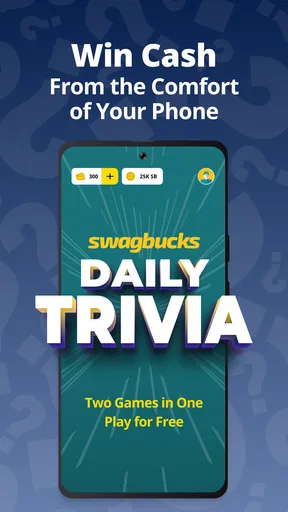
I like trivia games that give me a reason to return without demanding a long session, and Swagbucks Trivia for Money fits that narrow space well. It is a free trivia game from Prodege, built around daily questions and the possibility of earning money or prizes. That promise sounds simple, but the important detail is how it changes the way I play: I am not only testing what I know, I am deciding whether a quick round is worth my attention at that moment.
After spending time with it, I see this as a casual quiz experience rather than a complete replacement for a traditional trivia app. Its strongest appeal is the connection between a short knowledge challenge and a broader rewards-focused service. The game is rated Everyone, so it is approachable for a wide audience, and its average rating sits at 4.2 from around 21 thousand ratings. That gives me reasonable confidence that the basic experience works for many players, while still leaving room for the frustrations that usually come with reward-based games.
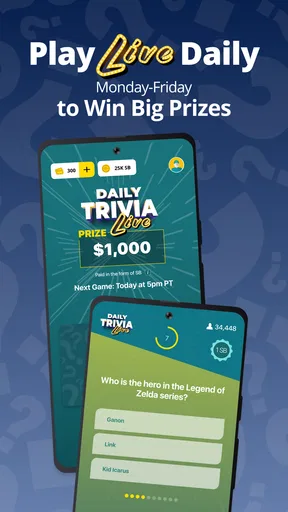
Daily trivia becomes more interesting when the result has a practical purpose
I’d look at the daily format as a small commitment rather than a reason to keep checking the app all day. That makes it easier to decide whether the routine suits me: I can give the questions a focused moment, then move on without turning a possible reward into pressure. The next thing I’d consider is how the game makes progress feel worthwhile even when a round doesn’t go my way.
The capability that makes this game different
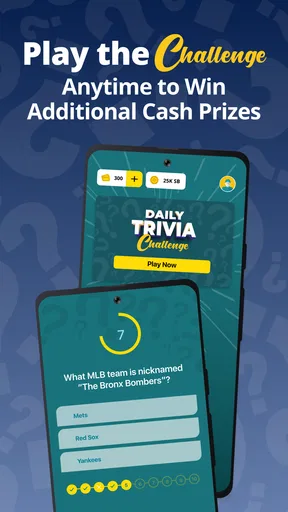
The central capability is the daily trivia format tied to money and prizes. In a normal quiz game, answering correctly is the entire reward. Here, the answer becomes part of a larger reward journey. That distinction matters because it gives routine players a stronger reason to open the app than simple curiosity.
I find this works best when I treat each session as a small opportunity rather than a guaranteed payout. The game can make a familiar habit feel more purposeful, but it does not turn trivia knowledge into dependable income. Anyone installing it mainly to make money will probably judge it too harshly. Anyone who already enjoys quizzes and appreciates an extra incentive is more likely to understand its appeal.
The short description, “Swagbucks Trivia,” is accurate in the broadest sense, but it does not explain the practical rhythm. I would describe the experience as a quick daily check-in: open the game, focus on the questions, and see whether the current opportunity fits into my day. That makes it especially suitable for small gaps in a routine, such as waiting for a meeting, taking a break from studying, or sitting on public transport.
One useful way to approach the game is to separate the entertainment value from the reward value. If I enjoy the questions even when the outcome is disappointing, the app still feels worthwhile. If I only care about the prize, every difficult question or unsuccessful attempt feels like wasted time. That mindset is one of the biggest factors in whether this title feels satisfying.
What a session feels like in practice
The trivia format encourages concentration more than passive scrolling. I need to read the question carefully, compare the possible answers, and commit before moving on. Even when I know the subject, a rushed choice can be worse than taking a moment to notice the wording. This is where the game has a small but meaningful advantage over casual social feeds: it asks me to actively use my attention.
I also appreciate that the daily structure gives the experience a natural stopping point. Many mobile games are designed to keep me playing indefinitely, but a trivia challenge can be completed and put down. That makes it easier to fit into a busy schedule and less likely to swallow an entire evening. For me, this is more appealing than a quiz app that keeps adding rounds without a clear reason to stop.
The game is not the best place for deep learning, though. A question can remind me of a fact or expose a gap in my knowledge, but the main goal is answering rather than studying. If I want explanations, lessons, detailed categories, or a structured path through a subject, I would choose an educational quiz platform instead. This one is better at creating a moment of challenge than building a complete course.
A realistic everyday routine
Imagine opening the game during a ten-minute lunch break. I can start a round, read each question without rushing, and finish before returning to work. If I do well, the reward angle adds a pleasant sense of progress. If I do poorly, the session is still short enough that it does not feel like a major loss. That balance is the most realistic use case I found.
Another practical routine is to use it as a low-effort alternative to checking social media. Instead of filling a spare moment with endless posts, I can give myself a defined mental task. The benefit is modest, but it is real: the app turns idle time into a quick test of memory and general knowledge. I would not call it a productivity tool, yet it can be a more engaging break than mindless scrolling.
For families, the Everyone rating makes the game easier to consider as a shared casual activity, but I would still play alongside younger users rather than assuming every question will suit every age or ability level. Trivia knowledge varies widely, and the reward element may encourage some players to focus too heavily on winning. Used casually, it can create friendly competition; used too seriously, it can make a simple quiz feel unnecessarily stressful.
Small habits that improve the experience
My first suggestion is to avoid opening the game when I am distracted. Trivia depends on reading accuracy, and answering while walking, multitasking, or switching between conversations makes the result less meaningful. A quiet few minutes usually gives me a fairer impression of my knowledge than a rushed attempt.
Second, I would keep expectations realistic about rewards. The game’s appeal is strongest when the possibility of money or prizes is an added benefit, not the only reason to play. Treating every session as a financial task can make the experience feel disappointing even when the trivia itself is enjoyable.
Third, I would use missed questions as a quick memory prompt. If a subject repeatedly catches me out, I can note it mentally and look it up later outside the app. This turns the game into a starting point for learning rather than expecting it to provide all the context itself. That small habit gives the questions more lasting value.
A fourth tip is to decide in advance how much attention I want to give the game. Because the daily format is compact, it is easy to make it part of a routine without letting it dominate the day. I prefer checking it during an already existing break rather than creating extra screen time specifically for it.
Where the reward angle helps, and where it creates friction
The obvious strength is motivation. A standard trivia app may be enjoyable once, but a rewards connection can give me a reason to return. This is particularly useful for players who like routines and small goals. The reward possibility also makes correct answers feel more consequential, even though the game remains casual in presentation.
The trade-off is that rewards introduce expectations. When a quiz is purely recreational, a wrong answer is easy to shrug off. When money or prizes are part of the experience, I naturally pay closer attention to the outcome. That can make the app more engaging, but it can also make ordinary limitations feel more frustrating.
I would also avoid confusing the game with a guaranteed earning app. The title may be entertaining and may offer reward opportunities, but it should not replace work, budgeting, or a dependable source of income. The right mental model is “play trivia with a possible extra benefit,” not “use trivia as a financial strategy.” That distinction is essential before installing it.
Compared with a conventional trivia game, this one is less appealing if my only goal is unlimited practice. A dedicated quiz app may offer more categories, longer sessions, detailed explanations, or competitive modes. Compared with a rewards platform that uses surveys or shopping tasks, the trivia format is more active and enjoyable, but it may require more concentration and knowledge. I would choose it when I want the reward activity to feel like a game rather than a form to complete.
What the technical details mean for a potential player
The game is free to install, which lowers the barrier to trying it. It has passed one million installs, so it is not an obscure experiment with no visible audience. I also noticed that it supports Android versions starting with 6.0, making it accessible on many older devices that cannot run newer software. That is useful for anyone who keeps a reliable older phone for casual games.
The current version is 2.12.2, and the app was released on February 8, 2018. The long presence on the platform suggests that the concept has had time to find an audience, but it does not automatically mean every player will enjoy it. Older games can feel familiar and stable while still showing design choices that are less polished than newer competitors.
Because it is a trivia game rather than a large action title, I would expect the main concern to be the quality and fairness of the question experience, not complex controls. The most important test is whether the questions feel readable, varied, and worth answering. If I dislike the wording or find the reward process distracting, the low installation price cannot compensate for that.
Who gets the most from it
This game is a good match for casual quiz fans who want a reason to play regularly. It also suits people who prefer short sessions, enjoy general-knowledge challenges, and like the idea of connecting play with prizes. Someone who checks a phone several times during the day may appreciate a defined activity that can be completed without learning complicated controls.
It can also work for players who are bored with passive reward tasks. Surveys and similar activities often feel repetitive because the user is mainly supplying information. Trivia gives me a more active role: I am making decisions, recalling facts, and accepting the outcome of my answers. That does not make it universally better, but it makes the process feel more game-like.
I would recommend skipping it if I needed predictable earnings, detailed educational feedback, or a deep competitive ladder. It is also not ideal for someone who dislikes daily routines or becomes annoyed when a reward does not match their expectations. A serious trivia enthusiast may prefer a specialist quiz game with richer statistics and a wider range of practice options.
Players who are very sensitive to interruptions should also think about the reward-focused design. Even a short session can feel less relaxing when I am constantly considering the practical outcome. For me, the solution is to keep the stakes mentally small and judge the app mainly by whether the questions are enjoyable.
My final view after weighing the trade-offs
I see Swagbucks Trivia for Money as a focused casual game with one clear hook: it gives daily trivia a possible practical payoff. That hook is effective when I already like quizzes and want a reason to return, but it becomes a weakness when I expect reliable income or a full learning system.
Prodege has positioned the game for accessibility rather than complexity. The free price, Everyone rating, broad Android compatibility, and established audience all make it easy to try. Still, those conveniences do not remove the need for realistic expectations. The value comes from the combination of a short mental challenge and a possible reward, not from either part alone.
My recommendation is straightforward: try it if you want a quick trivia habit and can enjoy the questions independently of the outcome. Give it a few sessions during ordinary breaks, pay attention to how the reward side affects your mood, and decide whether the experience feels worthwhile. If the quiz itself keeps me interested, the rewards are a welcome extra. If the reward is the only thing I care about, I would look for a different kind of app.
Privacy and Permissions
See what permissions an app requests and how it handles your data.
- Wi-Fi connection information
- view Wi-Fi connections
- Other
- view network connections, full network access, run at startup, control vibration, prevent device from sleeping
Verdict
Strengths of Swagbucks Trivia for Money
- Short trivia rounds make it easy to play during spare moments.
- Questions cover varied topics, keeping sessions from feeling repetitive.
- Clear progress and reward tracking help monitor your earnings.
- Works well for casual players who enjoy quiz-based challenges.
- Can provide extra entertainment alongside Swagbucks’ other activities.
Limitations of Swagbucks Trivia for Money
- Cash rewards may require significant time and consistent participation.
- Some questions can feel overly simple for experienced trivia players.
- Reward availability and payout options may vary by location.
- Ads or promotional prompts can interrupt the overall experience.
- Incorrect answers can limit progress and reduce potential earnings.
Other Releases by Prodege
View All
Swagbucks Play Games + Surveys
Lifestyle4.1
Similar Picks in This Category
View All
Millionaire 2026 Quiz & Trivia
Quiz & Trivia Games by Submarine Apps4.5

Brain Test 2: Tricky Stories
Unico Studio4.7

Trivia Crack: Brain Quiz Games
etermax4.4

QuizzLand. Quiz & Trivia game
Quiz & Trivia Games by Mno Go Apps4.8

Brain Test: Tricky Puzzles
Unico Studio4.7

Logo Quiz
bubble quiz games4.5
Frequently Asked Questions
What is Swagbucks Trivia for Money, and how does it work?
Swagbucks Trivia for Money is a trivia-based rewards experience connected to the Swagbucks platform. Players answer general-knowledge questions, complete available challenges, and collect points or rewards when eligible. The exact format, prize availability, and earning opportunities may vary by location and over time, so users should read the in-app rules carefully rather than assuming every game guarantees cash.
Can I really earn money by playing Swagbucks Trivia?
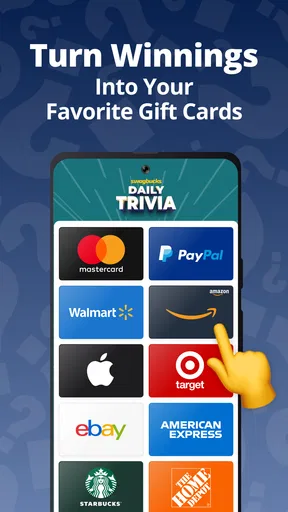
The app may let eligible users earn Swagbucks points, commonly called SB, through trivia activities and other qualifying tasks. These points can sometimes be exchanged for gift cards or other available rewards, depending on the account and region. However, earnings are generally modest, may require reaching a redemption minimum, and should not be viewed as a dependable income source.
Is Swagbucks Trivia for Money free to download and use?
Swagbucks Trivia for Money is generally free to download, although the app may include optional offers, advertisements, promotions, or activities with specific conditions. A stable internet connection may be required, and normal mobile data charges can apply. Before participating, check whether a particular challenge has eligibility requirements, deadlines, purchase conditions, or other restrictions.
How do I redeem rewards earned from Swagbucks Trivia?
After accumulating enough eligible SB points, users can usually request rewards through the redemption section of their Swagbucks account. Available options may include digital gift cards or other payment methods, but choices and minimum thresholds differ by country and account status. Processing is not always immediate, and identity, email, or account verification may be required.
What should I know about privacy, eligibility, and account restrictions?
Users should review Swagbucks’ privacy policy, terms of service, and the specific trivia rules before creating an account. Age, country, device, and promotional eligibility requirements may apply. The service can also limit or investigate accounts for unusual activity, inaccurate information, duplicate accounts, or attempts to bypass its rules, which may affect points and reward redemption.
Play our best games!


